
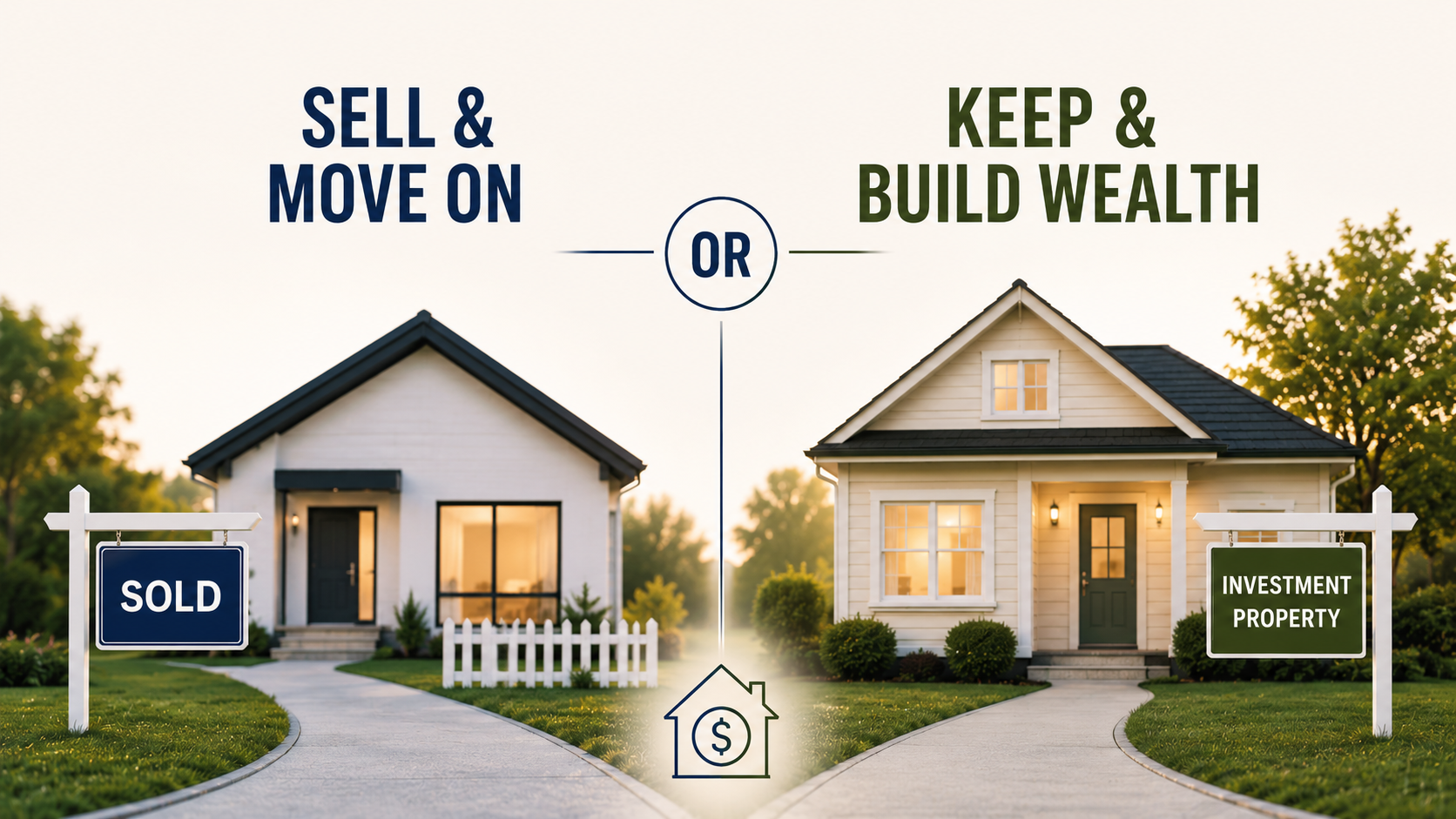
For many homeowners, upgrading follows what feels like a familiar path.
Sell the current home, use the equity as a deposit, then move into the next one.
It's the approach most people expect.
But it's no longer the only option.
More homeowners are asking whether they should keep their first home as an investment property while purchasing their next one. Depending on your financial position, that could be a strategy worth exploring.
In this week's update, let's look at why more people are considering this approach and what you should understand before making the move.
Many first homes purchased several years ago have quietly built up equity through regular mortgage repayments and changes in property values.
For some homeowners, that has opened the door to possibilities they hadn't previously considered.
Instead of selling, they are asking whether their existing property could become the foundation of a future investment portfolio.
That doesn't mean it's the right choice for everyone, but it does mean it's worth understanding what may be possible before automatically putting your home on the market.
One of the biggest misconceptions is that buying another home always requires a large cash deposit sitting in the bank.
In many situations, the equity you've already built in your current property may be able to contribute towards the purchase of your next home.
Exactly how much equity is available depends on several factors, including your property's value, the size of your existing mortgage and the lending policies of the bank you're working with.
The important thing is knowing your position before you start attending open homes.
Having enough equity is only one part of the equation.
The bigger question is often whether the lending remains affordable once you own two properties.
When assessing an application, lenders look at your existing mortgage, proposed new lending, your income, expected rental income and your overall financial commitments.
While rental income certainly helps, banks generally don't include every dollar of rent when calculating affordability. They also apply their own assessment interest rates, which can be significantly higher than the rate you'll actually pay.
That's why borrowing capacity can sometimes be very different from what homeowners expect.
Just because you already own a property doesn't necessarily mean it's the best one to keep.
A good investment property is one that attracts reliable tenants, requires manageable maintenance and supports your long-term financial goals.
Location, rental demand, ongoing costs and future resale appeal should all form part of the decision.
Sometimes selling is still the better financial outcome.
Sometimes keeping it creates greater opportunities.
The right answer depends on your individual circumstances rather than a one-size-fits-all strategy.
This decision isn't purely about numbers.
Many homeowners are upgrading because life has changed.
Perhaps the family has grown and flown, you need to be closer to work or you've simply outgrown your current home.
The goal is to improve your lifestyle without creating unnecessary financial pressure.
Owning two properties should provide greater flexibility and future opportunity, not leave you feeling stretched every month.
One of the biggest advantages of speaking with a Mortgage Adviser early is that you can explore both options before making any decisions.
Rather than assuming you have to sell, or assuming you can keep your current home, you can compare both scenarios side by side.
That allows you to understand how each option affects your borrowing power, cash flow and long-term financial position before you commit.
Keeping your first home and turning it into an investment property can be an excellent long-term strategy for the right homeowner.
Equally, selling and using your equity to reduce debt or purchase your next family home may be the better path.
The important thing isn't following what everyone else does.
It's understanding which option best supports your own financial goals.
If you're thinking about your next move and wondering whether keeping your current home could be possible, I'd be happy to help you work through the numbers and explore your options. Feel free to reach out for a no obligation chat.