
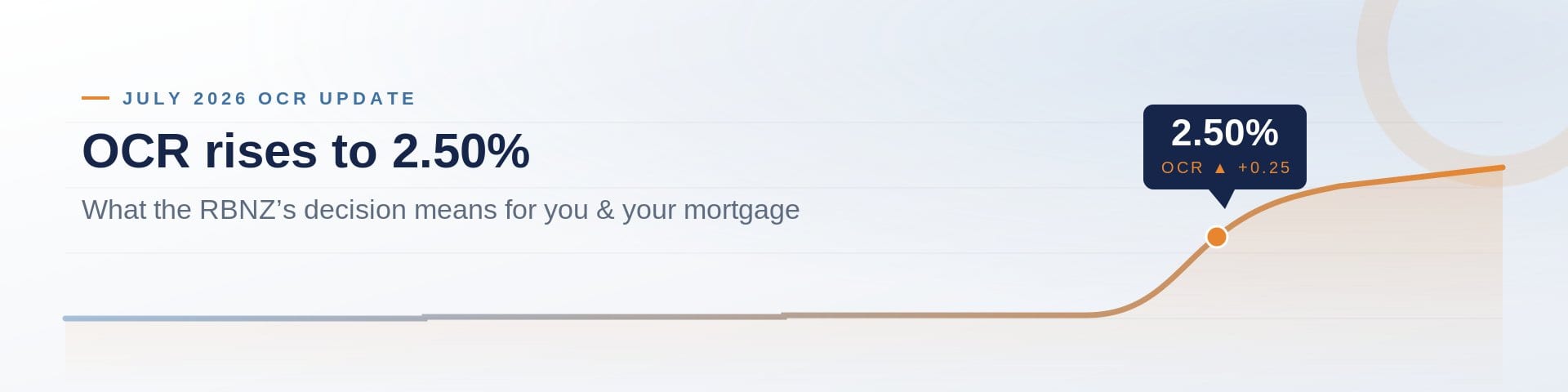
On the 8th of July the
Reserve Bank of New Zealand lifted the Official Cash Rate (OCR)
by 25 basis points to 2.50%, the first move in what looks set to be a gradual tightening cycle. The decision was reached by consensus, and
while markets had largely picked a hike, a number of economists had backed a hold right up to the announcement.
The backdrop is a mix of easing and caution. Global oil prices have fallen sharply following the partial reopening of the Strait of Hormuz, which has taken some heat out of near-term inflation. But the Reserve Bank was wary that holding the rate could let financial conditions loosen too far, and it remains uncertain about medium-term inflation. In short, it judged now was the time to start withdrawing stimulus.
Headline inflation is expected to have peaked around 3.9% in the June quarter before easing back toward the 2% target by mid-2027.
The important detail for anyone with a mortgage is where rates are heading, and the picture isn’t uniform. Short-term fixed rates and floating rates have been drifting up, while longer-term fixed rates have actually eased. That divergence reflects markets pricing in higher rates now but lower rates further out.
The Reserve Bank has flagged that further OCR increases appear likely, though the timing is genuinely uncertain. Bank economists broadly expect the OCR to finish 2026 around 2.75–3.00%, with forecasts for the effective mortgage rate climbing toward the low-5% range by mid-2027.
For borrowers, that makes your refix strategy more consequential than usual, and this is why advice is even more important:
The length you choose matters. A longer fix can offer more certainty, while shorter terms leave you exposed to further increases if the forecasts are accurate.
That’s where the most upside risk sits from here. If you are floating for a particular reason (e.g. selling soon, or moving banks) it may make sense to get floating discounts in the interim — which we can help with. If you’re fixing short-term, it’s worth a sense-check just to make sure you’ve thought through the different scenarios.
Waiting passively is rarely the best approach in a rising environment. Depending on which bank you’re with, you can often re-fix 30–60 days out from your rate expiry — so you can grab some certainty and get rates locked in before there are any other changes to interest rates.
A single 25-point move won’t reshape your repayments overnight, but the direction of travel is clear. The right structure depends entirely on your own position, cashflow and goals — so if you’ve got a refix coming up or you’re weighing your options, now is the time to review.
Is your mortgage still working as hard as it should be? Book a free mortgage review and we’ll check your rates, structure and refix options before the next move. Or call us on 09 486 4719.