
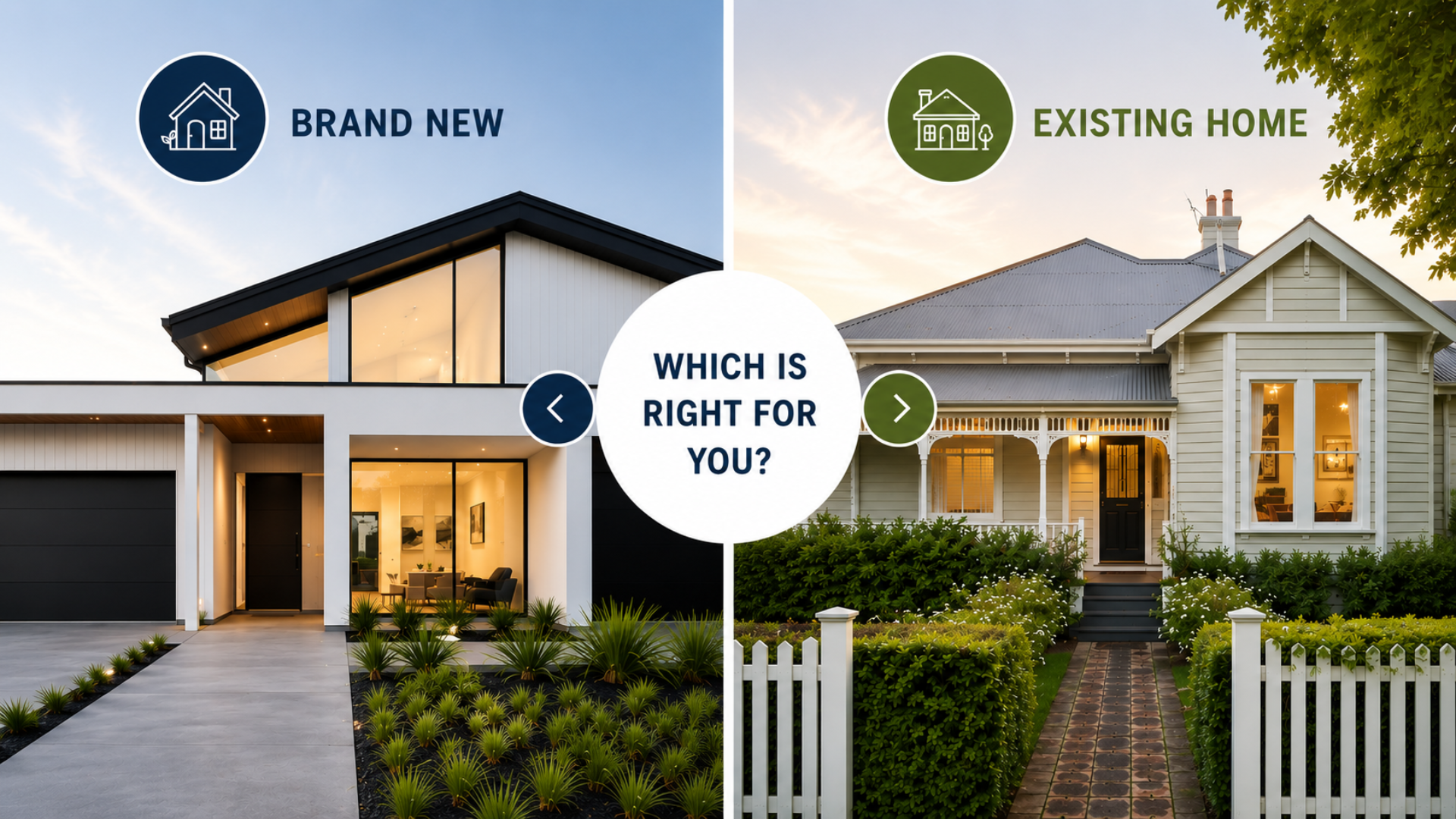
Buying your first home is exciting, but one of the biggest decisions you'll make comes before you even start house hunting.
Do you buy a brand new home, or an existing one?
Both options have their advantages. The right choice depends on your budget, your lifestyle and what matters most to you over the long term.
In this week's update, I'll walk through the pros and cons of each so you can make a more informed decision before taking the next step.
The Case for Buying a Brand New Home
There's a reason many first-home buyers are drawn to new builds.
Everything is brand new. Maintenance is usually minimal, appliances are modern and in many cases you can simply move in and enjoy your new home from day one.
There can also be lending advantages.
New builds continue to receive favourable treatment under some Reserve Bank lending rules. For example, they are generally exempt from Loan-to-Value Ratio (LVR) restrictions, which can make it easier for eligible buyers with smaller deposits to secure finance. Some new builds may also qualify for Debt-to-Income (DTI) exemptions when purchased directly from a developer within the required timeframe.
That doesn't automatically mean approval is guaranteed. Every lender still has its own lending policy and affordability assessment, which is why having a Mortgage Adviser on your side can make a real difference.
Modern homes also tend to include features that can reduce your ongoing costs.
Double glazing, better insulation, energy-efficient heating and newer building materials often result in lower power bills and a more comfortable home throughout the year.
Many new homes also include open-plan layouts and smart home technology that appeal to buyers looking for convenience and a move-in-ready lifestyle.
The trade-off is that new builds can sometimes come with a higher purchase price or be located in developing suburbs where schools, transport and amenities are still evolving.
The Appeal of an Existing Home
Older homes offer something many buyers value just as highly.
Location.
Established suburbs often provide mature trees, larger sections, well-developed communities and easy access to schools, parks, shops and public transport.
If lifestyle and convenience are high on your priority list, an existing home may offer more options.
Many older homes also provide opportunities to add value over time.
Simple renovations such as updating kitchens, bathrooms or flooring can improve both your enjoyment of the property and its long-term value. If you're prepared to invest gradually, this can become a smart way to build equity.
Of course, older homes can also come with surprises.
Maintenance costs are generally higher, and some properties may require significant work sooner than expected. That's why building inspections are an important part of the buying process. They help identify potential issues before you commit, allowing you to budget appropriately and avoid unexpected costs later.
Think Beyond the Purchase Price
The cheapest home isn't always the most affordable over the long term.
When comparing properties, it's worth considering the total cost of ownership.
A newer home may cost more upfront but require very little maintenance over the next several years.
An older home may be less expensive to purchase, but renovations, repairs and higher running costs could narrow the gap over time.
Looking at the bigger financial picture often leads to a better long-term decision.
Consider Where Life Is Taking You
Your first home isn't just about today. It's about where you'll be in five or ten years.
If you're planning to start a family, you may want to prioritise school zones, parks and future space requirements.
If flexibility is more important, you may value a low-maintenance property that allows you to focus on your career or travel.
Thinking about your future plans now can help you choose a home that continues to suit your lifestyle as it evolves.
The Right Choice Is the One That Fits Your Situation
There isn't a universal answer to the new build versus existing home debate.
Both can be excellent first homes.
The key is understanding how each option fits your financial position, your future plans and your borrowing ability before you start making offers.
That's where working with a Mortgage Adviser can really add value.
We can help you understand your borrowing options, explain how different lenders view different property types and make sure you're buying with confidence, not just emotion.
So, if you're starting your first-home journey and would like to explore what's possible, feel free to get in touch. I'd be happy to help you map out the right strategy.